The MGA With An Attitude
CO-201 is all about CRUD IN THE WATER JACKET and how to remove it.
The sediment that collects in the bottom of the water jacket can almost never be cleaned out with chemical flushing agents. In fact it is often so deep and so stubborn that hot tanking the block will often not remove the stuff. Any time I have an engine apart for machine work I will manually route out the sediment. Remove the cylinder head and the water pump and the core plugs along the side of the block. Use a 1/8 inch steel rod held with a Vice-Grip to reach into the water jacket through the coolant flow holes in the top of the block, and chip away diligently at the scale like stuff in the bottom of the water jacket. With the core plugs and water pump removed you can see inside fairly well to get a good idea what you're poking at down there. If you stand the block on end with the front end down the junk will mostly fall out through the water pump opening. With about 20 minutes of probing around in this manner I have often been able to dislodge as much as two pounds of rust and water stone from an old MG engine block. Then I have it hot tanked. Now when I reassemble an engine I always toss the drain cock in the novelty bin and install a blank plug in the drain port. Then next time I feel the need to open the drain port it's easier to remove the plug than it would be to remove the drain cock in order to attempt to route out the port. And you can pretty well bet the farm that with about two years time the port will be clogged with sediment again, even when you are using 50/50 mix of glycol and water, and even if you do use a corrosion inhibitor. It beats me where all the rust comes from, but trust me, it does come. The drain port thread is 1/4-inch BSPP (British Standard Pipe Parallel thread). The standard thread designation is G-1/4. This is a Whitworth form parallel fastening thread, 19 threads per inch, and major diameter is 0.518-in (13.157-mm). Most people these days consider this as an odd thread, not generally available at local hardware store. 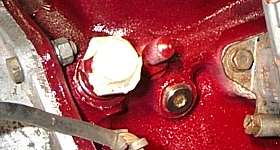 The water drain port is rather shallow, so the plug needs to be short. You could buy a plug from McMaster Carr, their part number 4860K126, currently $4.28 (May 2009). This plug is nickel plated brass and is supplied with a rubber o-ring seal (good for at least one use), but you can also use the original copper washer. This plug is round on the OD of the head and needs a 6-mm hex key (Allen wrench) for installation.
 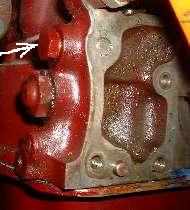 This thread is common to a few other things on the engine. There is a suitable short hex head plug on the left side of the engine block just above the oil pressure relief valve, called "Plug, transverse oil hole", MG factory part number 2K4992. There is a Moss Motors part number 328-180, currently $9.95. This plug is short, but the threaded port is substantially deeper here. The oil pan drain plug also has the same thread but is longer. Factory part number here is 2F4249, Moss Motors part number 328-280, currently $6.85. So I have a personal favorite trick here. I like to take the oil plug from the left side of the engine block and use that for the coolant drain plug. Then I take the oil pan drain plug, install that in the left side of the engine block, and buy a new magnetic drain plug for the sump. That could be Moss Motors part number 328-282, currently $12.35, but you may also find oil drain plugs at a local auto parts store.
 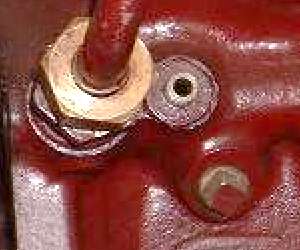 In a pinch you could use a American standard tapered pipe plug, 1/4-NPT. This is 0.540-inch pipe diameter and 18 threads per inch. This is not a perfect fit, but if you apply thread sealant and screw it in tight it can be leak free. It will most likely damage the female thread slightly. You may be able to R&R this plug at will, but the port threads may no longer accept the original drain valve or a straight thread plug. |


