The MGA With An Attitude
WAVING SPEEDOMETER NEEDLE - ST-106
On 20 March 2007, Steve Gyles in UK wrote:
".... the speedo was oscillating plus/minus a few mph. What is the usual cause of this? Is it something I could have rectified on my workbench?"
 (Click on picture for video) (Click on picture for video)
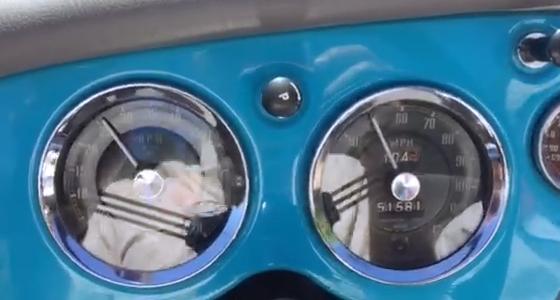
(Click on picture for video)
Source of the oscillating speedo needle is the little ratchet pawl pushing the final odometer drive sprocket around. For the 1450 rev/mile unit the final sprocket has 58 teeth, so the oscillation happens 58 times per mile, or almost once per second at 60 mph.
Turning the first rotating wheel of the odometer puts a load on the drive pawl. This periodic load in turn puts an end load on the input shaft from force being fed through the primary drive worm gear. Periodic end load then causes a pulsating end float of the input shaft. This modulates the space between the spinning magnet and the mating metal disc. That varies the magnetic attraction, in turn causing the needle to pulsate. The needle motion is bi-stable, moving back and forth between two fixed positions (but bouncing a little in the process).
To fix this you first need to remove the mechanism from the case, which is a trick in itself. Then clean and lube the odometer drives (both of them) and the odometer wheels (all of them) with a small drop of light oil.
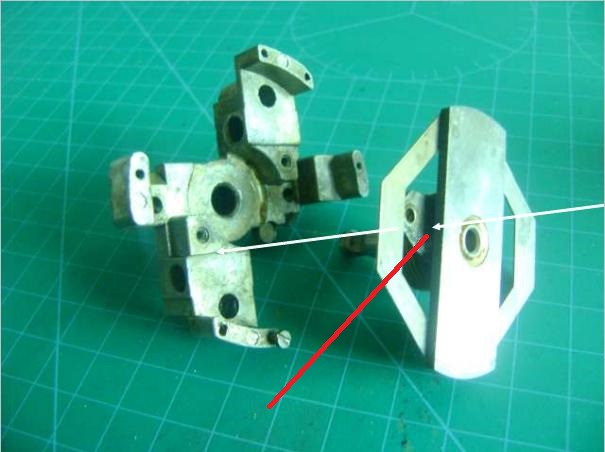
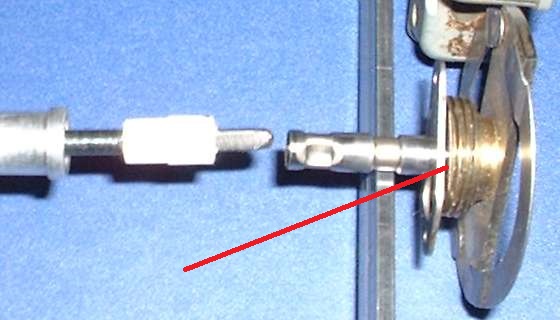
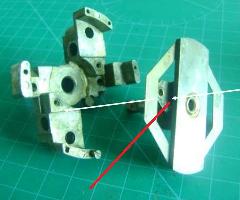 If there is excessive end float on the input shaft, this may be reduced by pressing the magnet hub slightly farther down the shaft to reduce the space that allows end float. I suggest placing a piece of paper in the gap to prevent pushing the hub too far down (which would cause binding of the shaft). If you don't like the risk of possible bending the shaft or pushing it too far, you can use a single thin strand of copper from a stranded electrical wire for a shim. Place the thin copper wire next to the bearing journal plate on the input shaft, and wrap it around the shaft in the shape of a pinched horse shoe (all on one plane with ends NOT overlapping). This will take up the space, serving as a thrust washer to reduce the shaft end float.
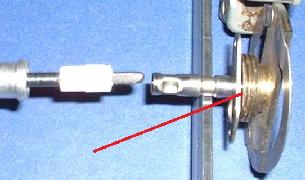
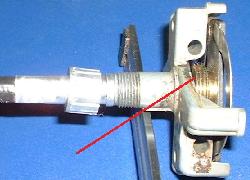
Reassembly is the reverse of disassembly (but even more challenging). When you finish you will have a nice steady speedometer needle, and it's time for an ale.
The condition of gummed up odometer wheels may be aggravated by long-term storage and/or minimal driving. The cars like to be driven regularly to stay loose. If you store the car a lot, and ignore the wavy speedo needle, the internal friction and mechanical load may increase with time. This can result in shearing of a few of the teeth from the final drive sprocket, and then the odometer stops working. Shearing of the teeth is most likely to occur when turning multiple wheels, as when it turns up from xx999.9 to xx000.0 Professional repair will likely cost more than $100-USD, so it's a good idea to clean it up before it breaks.
|