The MGA With An Attitude
BATTERY CABLES For MGA - SS-103
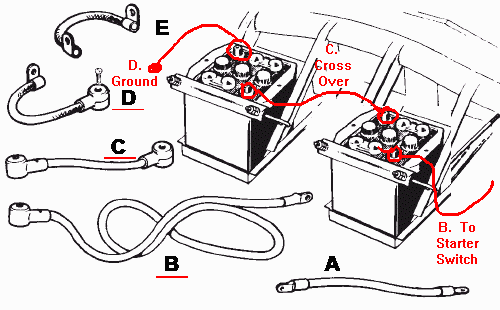
A. The cable from the starter switch to the starter is 13" long and has a 1/4" eyelet at the starter end and a 5/16" eyelet at the switch end.
B. The heavy current cable from the battery to the starter switch is 95" overall and has a 5/16" eyelet at the switch end. Do not go shorter than 95".
C. The cable running between the original twin 6 volt batteries is (15" long overall ???) and is short enough to be self supporting and not drag on the propshaft.
D. The battery to chassis ground cable is (12" long ???) with a 5/16" eyelet at the chassis end. The original chassis grounding point is a bolt in a frame flange near the center exhaust hanger.
E. The cable that goes around the left motor mount for engine ground return is braided, un-insulated, 6.5" long and has 5/16" eyelets at both ends.
The four original battery cable connectors were the vintage helmet type connectors with a single round head lag screw (full thread wood screw) in top to secure the terminal to the battery post. Replacement cables may have bolt type pinch connectors. The battery terminal posts are tapered and different sizes, roughly 5/8" and 3/4" diameter with the positive post being larger. If you convert the electrical system from positive earth to negative earth you can turn the batteries around 180 degrees in the carriers. The center battery cable can switch ends, but the main and ground cables must change connectors for the different post size. It may be convenient to buy a new ground cable to change connector size there. For the longer main power cable it is more common to cut the cable to remove the original terminal and install a new cable connector for the different post size.
The original main cable from battery to starter switch is 1 AWG (about 0.31" diameter stranded copper wire). The much shorter cable from starter switch to starter is smaller 4 AWG (about 0.20" diameter stranded copper wire). The other shorter cables may similarly be 4 AWG. All cables originally had black insulation jacket, except for the engine ground strap which was bare and braided. Replacement battery cable insulation jacket is commonly either red or black regardless of terminal size. Do not let the cable color fool you when it comes to determining vehicle electrical system polarity for battery hookup or for using jumper cables. See following page for further discussion of cable sizes.
Currently available 12 volt batteries are physically larger than the original 6 volt batteries (which were nearly square). If you install a single 12 volt battery you will most likely need to cut and weld to extend one of the battery trays. It is common practice to put the single battery on the right side to avoid having to lengthen the main battery cable, and to improve left to right weight distribution when driving with no passenger (left hand drive car). Then you need to install a longer battery ground cable, or relocate the chassis cable grounding point closer to the right side battery carrier. If you use a long battery ground cable to connect to the original chassis grounding point, be sure to secure the cable for support so it cannot drag on the propshaft. Tie-wraps work well to attach this cable to the large round frame tube just under the battery cover panel. If you have a right hand drive car and are concerned about weight distribution, you might put a single 12 volt battery on the left side. Then you need to either replace or extend the main battery cable to reach to the left side. Also secure this crossover cable so it cannot drag on the propshaft.
You might consider installing a battery cut-off switch, which I like to use for maintenance purposes (or could be a casual theft deterrent). I installed mine in the rear plywood bulkhead panel, easily accessible behind the seat, near the original cable grounding point. I then connected the original battery grounding cable to the switch and used a duplicate of the original engine grounding cable to connect the cut-off switch to the original chassis grounding point. If you use a battery cut-off switch that mounts on one of the battery posts you will not need any additional cable, but you may need to change the original cable connector to attach to the switch (depending on switch design).
Installing the cut-off switch at the battery to chassis grounding point makes it impossible to accidentally short circuit a hot battery terminal or cable to the frame with a metal tool (when it is switched off). This follows the traditional workshop manual instruction to disconnect the battery ground cable when working on the vehicle electrical system.
Accidentally shorting a metal tool between the battery grounding post and the chassis (with cut-off switch open) will restore the normal battery connection to the vehicle electrical system. With two 6 volt batteries, shorting the intermediate cable to the chassis (with cut-off switch open) will apply 6 volts to the normal 12 volt electrical system. This might cause a small spark depending on what might be switched on at the time.
WARNING: When all cables are connected (and cut-off switch closed), accidentally shorting a metal tool between one of the hot cables and the chassis will cause a catastrophic arc similar to an electric arc welder. This involves enough electrical power to melt a steel tool and possibly burn your fingers. It could possibly cause a hydrogen gas explosion to destroy a battery, spattering sulfuric acid about in the process.
Rules for some vintage racing organizations may dictate installing a battery cut-off switch in a different manner. Consult the local organization rule book for this information. Specifically, it is common to require a battery switch in the main battery power cable, physically accessible from outside the vehicle. This switch should include a third terminal that can ground generator or alternator output to prevent run-on after switch off.
|


