The MGA With An Attitude
BOOT LID SEAL MAGIC -- BD-116A
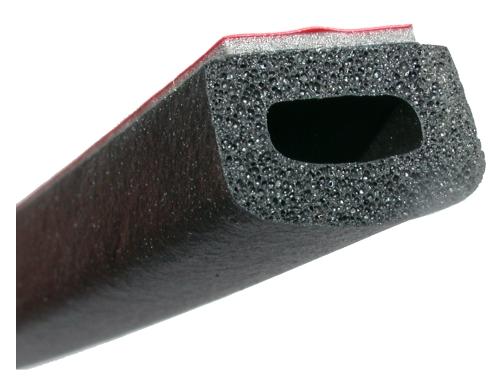
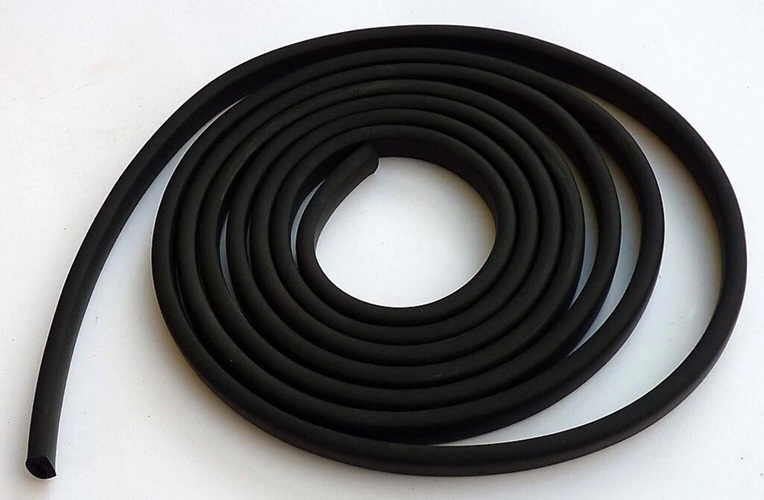
This is BMC part number AFH1753, Sealing rubber for boot lid on the MGA. Two different boot seals are shown here, a solid foam rubber seal from Moss Motors, USA, #280-714 on left and a softer hollow rubber seal from MacGregor, Canada, #mgar-bt-1 on right. The Moss seal is a bit too thick and significantly too hard. It will cause the boot lid to stand proud of the surrounding body panel, and the seal may leak. If you tighten the latch trying to make it seal, it may be very difficult to latch, possibly hard to unlatch, and may be susceptible to damaging the aluminum boot lid (or paint) while slamming it to get it latched. The MacGregor seal is much softer allowing easy compression. This one will seal nicely, and the boot lid can be closed flush with a gentle push.
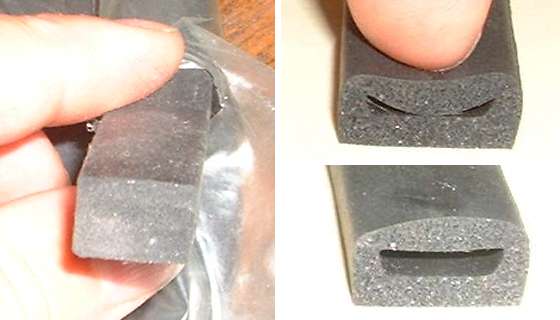
The magic here is not only in the durometer of the rubber, but more in the section shape of the extruded part. The second seal is hollow and crowned on top. When pressed it can compress very easily until the top wall touches the bottom wall, after which it reverts to a more firm character of being solid. The graph below charts deflection vs. force for each seal.
Moss Motors - Solid Seal
0.405 Thick x 0.580 Wide
1 Lb = 0.005" compression
3 Lb = 0.015" compression
Force applied to one linear inch of seal.
Circles depict measured data points.
|
MacGregor - Hollow Seal
0.375 Thick x 0.760 Wide
0.10 Lb = 0.010" compression
0.38 Lb = 0.035" compression
0.75 Lb = 0.065" compression
1.0  Lb = 0.075" compression
1.5  Lb = 0.085" compression
3.0  Lb = 0.100" compression
|
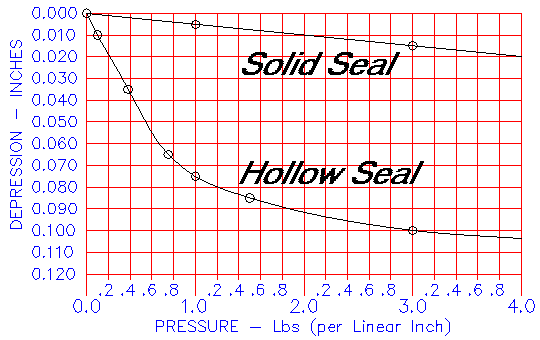
The seal is close to 120 inches long. A practical upper limit for total force applied to the boot lid might be about 40 pounds, which would be 10 pounds at each hinge and 20 pounds at the latch point. (Keep in mind that the aluminum skin boot lid only weights about 5 pounds). This 40# force divided by 120" seal length makes 0.33# force on each linear inch of seal (on average). By the chart above, this makes the hollow seal deflect about 0.030" while the solid seal will deflect about 0.002". Finish height of the solid seal would be .403" while finish height of the hollow seal would be 0.345". That 1/16" difference in height makes a lot of difference in appearance when the lid may stand significantly proud of the surrounding body or may fit flush.
Equally important, 0.002" deflection of the solid seal is certainly not enough to accommodate the expected small mismatch in shape between the lid and the body aperture. In this case the lid is likely to depress the seal somewhat more (perhaps 0.005") in the immediate vicinity of the hinge and latch points, and may still not touch the seal at the lower corners or half way up the sides. A lot depends on initial shape of the lid and how much it may bend with such forces.
The hollow seal has a generous ability to accommodate larger variations of the lid shape. Height variations of +/-0.020" (0.040" range of irregularity) make for force variations in the range of 0.1#-0.5# per inch of seal without changing the total force on the lid and without losing contact between seal and lid. In the real world this works very well. Just adjust hinges and latch to make the lid shut flush, and you can easily press it to latch with the palm of your hand over the latch point.
Addendum September 2012:
We have now identified a UK supplier for the same soft hollow boot seal. This is a seller on www.ebay.co.uk named "lotsofclassicbits" (search for "seal"). -- Today I can't find the part there (1/17/17).
On 9/25/2012, Kelvin Dodd of Moss Motors, Ltd, USA, wrote:
"Based on your comments Moss changed supplier and had new hollow type seal manufactured for this application. All supplies to both Moss US and Moss UK have been of this type since late 2010".
Addendum January 17, 2017:
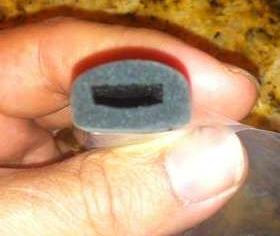
Perhaps this is not the best solution. See next page.
|
|
Addendum January 20, 2017:
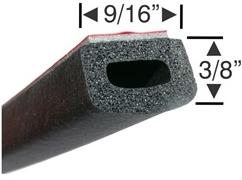
Here is one that seems to fit and work well:
www.steelerubber.com/extrusion-kit-sre1723-10ft-83-0110-73
Alan Wiedie in Bolton, CT, USA wrote:
"I used a seal supplied by Steele Rubber Products, and it passes Barney's "pinky test". A 10' piece will do the job. The self-stick tape has no problem going around the corners. I cut a section of the tape away where the seal passes over the two latch screws.
Addendum December 13, 2017:
And another one reported to fit and work well:
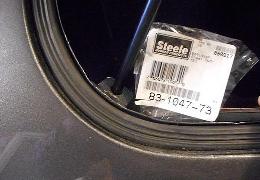
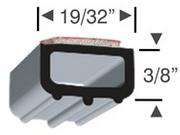
www.steelerubber.com/extrusion-street-rod-10ft-83-1047-73
On Dec 13, 2017, Mitchell Andrus in Mills River, North Carolina, USA wrote:
"It's a perfect fit, and because it's hollow you can make a slit and invisibly insert a hunk of rubber here and there to shore up a sagging corner to get a nice level deck lid".
Addendum March 28, 2024:
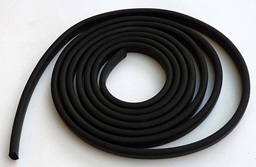
This one was brought to light by Robin Guojah in London, UK. Available via eBay in the UK, while the link lasts:
https://www.ebay.co.uk/itm/201606090524
John Russell in Okehampton, Devon, UK wrote: "That's the one I used. It's perfect. The right shape and it squashes down when the lid is closed and seals perfectly".
|