The MGA With An Attitude
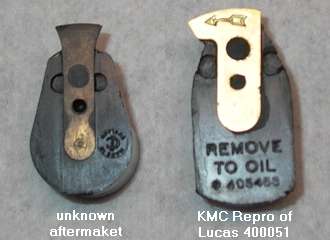
Here we have pictures of a variety of distributor rotors you may find in your Lucas distributor or available from parts suppliers. The first one at top left may have a functional problem when used in a vacuum advance type distributor, because it does not have the sickle shape output end. Normal rotation is anti-clockwise. When the vacuum advance mechanism operates it pulls the contact points mounting plate clockwise. This causes the points to open with the rotor (and cam) in a more clockwise position with the rotor being misaligned relative to the distributor cap contacts. So the sickle shape rotor end is needed to keep the rotor tip close to the cap contacts at time of spark.
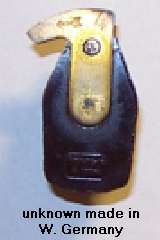
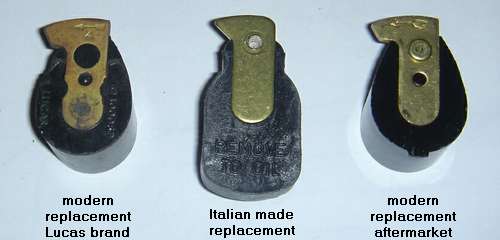
Shape of the plastic body of the rotor is functionally irrelevant, except that it may have a slight improvement in balance and gives a larger grip to pull it off for servicing. Some rotors have a metal rivet where others use a plastic pin that is thermally or ultrasonically "welded" (melted over like a rivet head). Either way is generally okay, but there is occasionally a problem with the last style rotor shown at lower right. In this case the rivet head is on top and it is peened over on the bottom end against the plastic. If the rivet happens to be set a little too tightly it can cause a crack in the plastic, either when new out of the box or after some time in service. A crack here can allow the spark to "leak" from the top contact arm to ground on the shaft underneath, which can cause a full power misfire or complete loss of spark. |